

Guide to Selecting the Right Ceiling Fan
A well-chosen ceiling fan is an essential element of a comfortable, well-ventilated home, yet it is often the most overlooked part of the design process. It isn't just about cooling; it's about finding a fixture that complements the proportions of your space while delivering quiet, efficient performance.
Getting the scale right is the difference between an integrated look and a fixture that feels out of place. In this guide, we’ll simplify the technicalities of blade spans and Australian safety requirements so you can be confident in selecting your fans.

Getting the Scale Right
The blade span (total diameter of the fan from blade tip to blade tip) dictates both the cooling potential and the visual balance of the room. Selecting a fan that is proportional to your floor area ensures the motor operates efficiently without overwhelming the space.
Sizing for Australian Living
To ensure optimal airflow, we recommend matching your fan diameter to your room size:
-
Small Rooms (up to 9m²): A blade span of 48” (122cm) or smaller is ideal for home offices or smaller bedrooms.
-
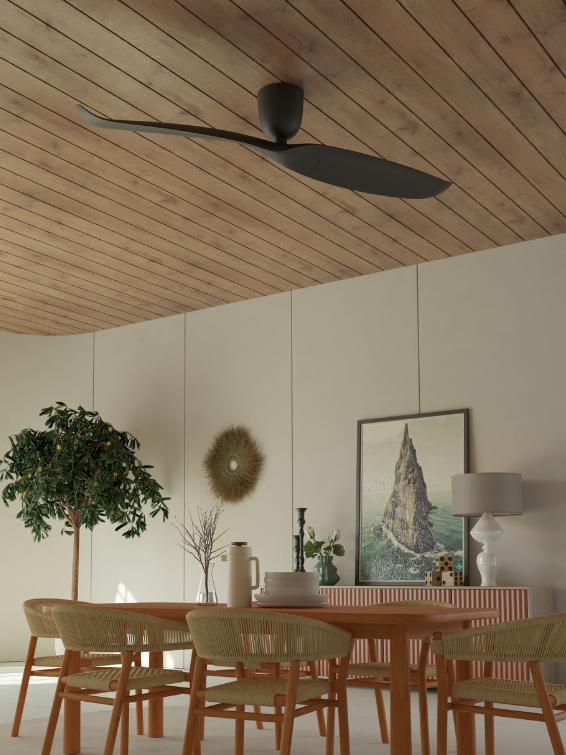
Medium Rooms (9m² to 16m²): Standard bedrooms and dining areas typically require a 48” (122cm) to 52” (132cm) fan.
-
Large Open Areas (over 16m²): For master suites or open-plan living zones, choose a fan with a diameter of 56” (142cm) or larger to move air effectively across the space.
-
Expansive Spaces: In very large spaces, it is often more effective to install multiple smaller fans over specific gathering points, such as a dining table or lounge, rather than a single oversized unit.
Sizing for the Master Bedroom
The average Australian master bedroom is approximately 4m x 3.8m, sitting right between medium and large specifications. While this space can accommodate fans up to 60" (152cm), a 52" (132cm) fan positioned directly over the bed provides sufficient cooling for sleep. For smaller master suites (3.5m x 3.5m), either a 52” or 56” fan is suitable depending on your aesthetic preference.

Height and Clearance
In Australia, installation height is a critical safety and performance factor that must be planned early in your project.
Safety and Performance
-
Height Requirement: To comply with Australian standards, fan blades must be positioned at a minimum of 2.1m from the floor.
-
Optimal Wall Clearance: To ensure smooth airflow we recommend a minimum clearance of 50cm from the tip of the blade to the nearest wall.
-
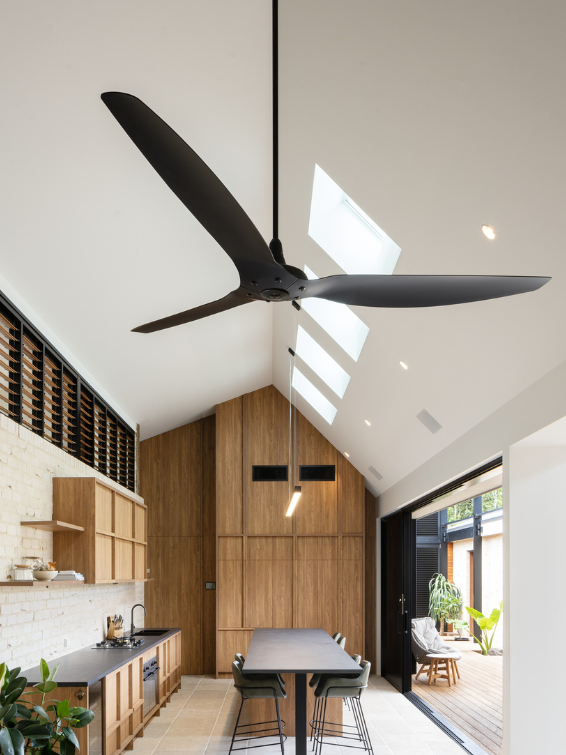
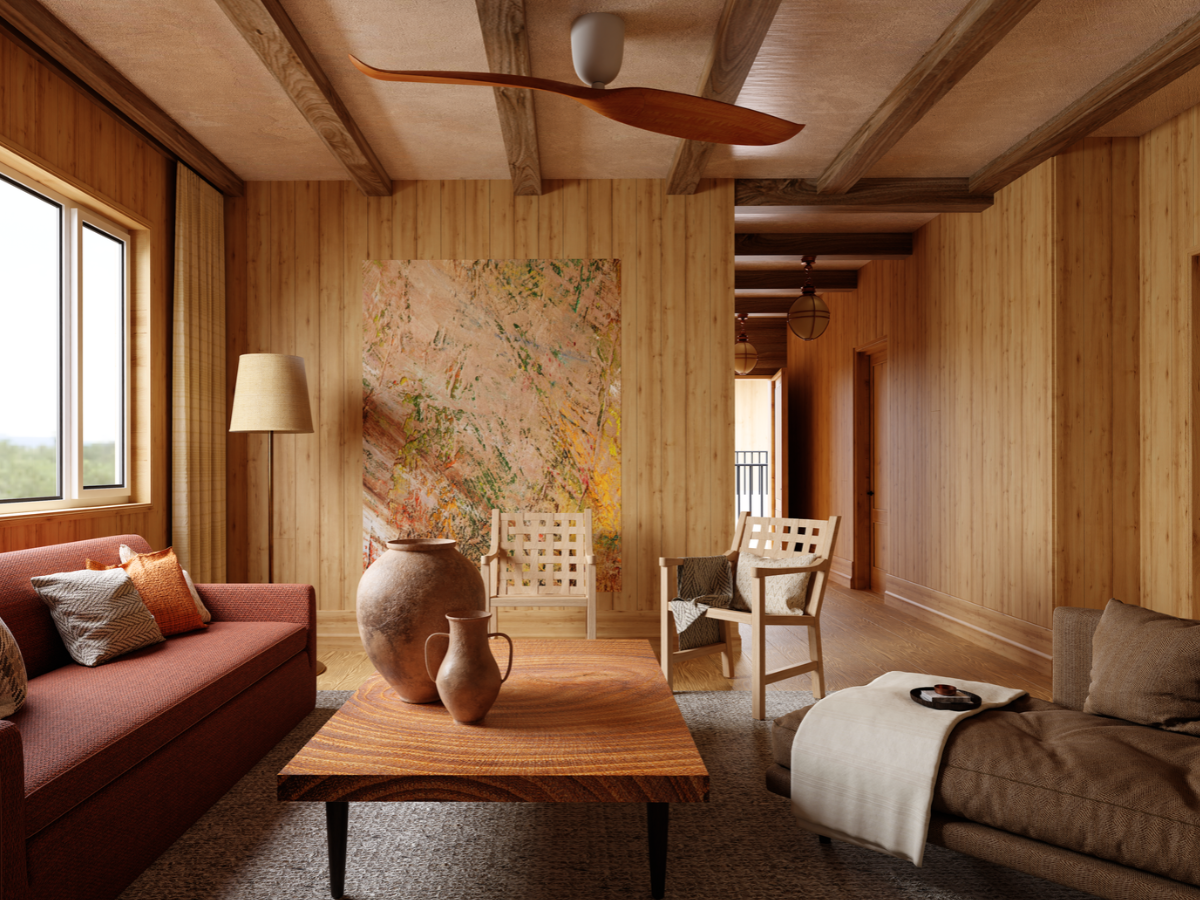
Extension Rods for High Ceilings: For homes with high ceilings, we often recommend using extension rods to bring the fan lower - ideally 2.4m to 2.7m above the floor - to maximise the airflow you actually feel.
Raked and Sloped Ceilings
If your space has raked ceilings, additional considerations apply to ensure the blades remain level and clear of the ceiling surface.
-
Mounting Angles: Most of our fans are designed to handle a degree of slope as standard. Always check the individual product specifications for the maximum "ceiling mount angle."
-
Sloped Ceiling Kits: For steeper pitches that exceed the standard mount, specific sloped ceiling kits may be available.
-
Blade Clearance: When installing on a slope, ensure the downrod is long enough so that the blades do not hit the ceiling at the highest point of the rotation.

Design Tips
-
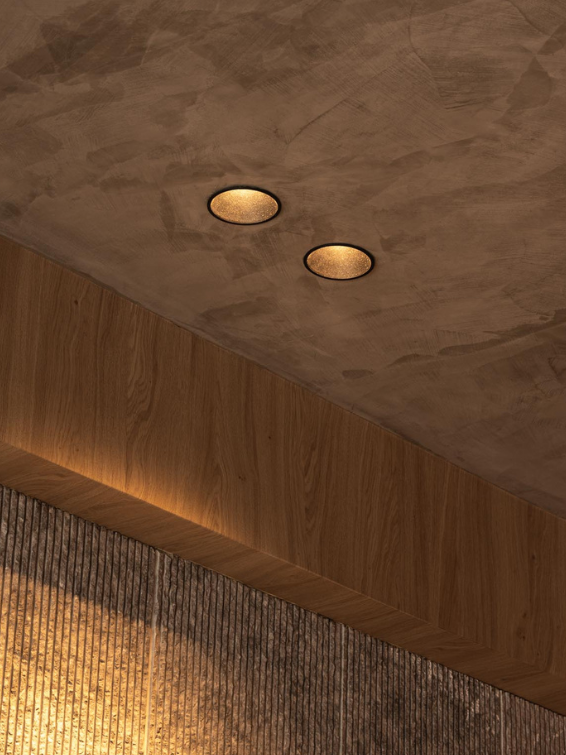
Avoid the "Strobe Effect": Ensure your fan is placed away from downlights to prevent a distracting flickering effect when the fan is operating.
-
Prioritise DC Motors: For bedrooms, look for DC motor fans; they are significantly quieter and offer more speed settings for year-round comfort.
Selecting for Your Space
Selecting the right ceiling fan is a simple matter of matching scale to your space and respecting Australian safety heights. When these details are handled correctly, your fan serves as a functional addition that enhances both your home’s climate and its overall design.
Use your room’s square meterage to find your ideal blade span, and always ensure your installation hits that 2.1m minimum height for safety.
Explore our full collection of ceiling fans and speak with our team for expert advice.
Read more
Organica by Your Home Designs, led by the discerning eye of designer Zoe Pohlmann, is a masterclass in modern coastal sophistication. Rooted in a relaxed, organic, and resort-inspired aesthetic, th...
An essential guide for explaining the Ingress Protection (IP) rating system. We’ll break down the numbers and what they mean for your lighting choices.